
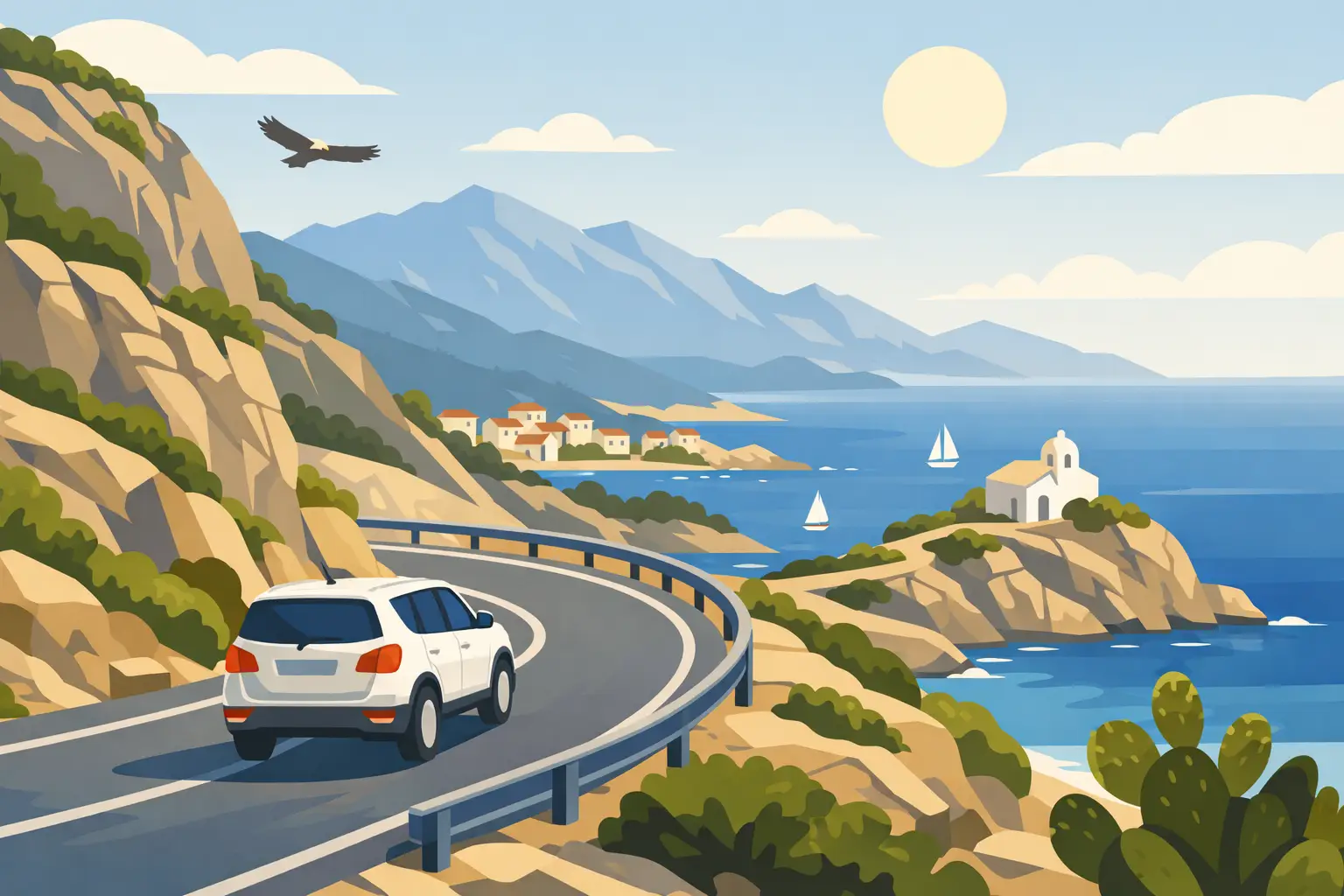
One minute you are on a smooth coastal road, and twenty minutes later you are climbing through hairpin bends with a goat around the next corner and a steep drop to your left. That is exactly why safe driving tips for mountain roads in Crete matter. The island rewards independent travellers with extraordinary villages, tavernas and views, but the road conditions can change quickly, especially once you leave the main routes.
Why mountain driving in Crete feels different
Mountain roads in Crete are not difficult in the same way as a motorway in heavy rain or a city centre at rush hour. The challenge is variety. You may drive from a wide, well-surfaced road onto a much narrower section with broken edges, blind bends and uneven tarmac within a few kilometres.
Many visitors are confident drivers at home and still find the first mountain route takes a little adjustment. Roads can be steep, barriers are not always present, and local drivers often know the route far better than you do. Add summer heat, scooters, wandering animals and occasional gravel on the road, and the sensible approach is simple – drive more slowly than you think you need to.
That is not about being nervous. It is about giving yourself time to read the road properly.
Safe driving tips for mountain roads in Crete before you set off
A calm drive usually starts before the engine does. If you are heading inland to villages, gorges or south coast beaches, check the route in advance and look at the kind of roads involved, not just the driving time. A 35-kilometre journey in the mountains can take much longer than it appears on the map.
Start earlier than you need to, particularly in summer. Midday heat can be tiring, and you do not want to feel rushed on unfamiliar bends. If you are travelling with children, plan a stop rather than hoping everyone will stay patient through an hour of cornering.
It also helps to choose a vehicle that suits the route and your confidence level. A small car is often ideal for narrow village roads and parking, but if you are a family with luggage and plan longer mountain days, a little more space and power can make the drive more comfortable. What matters most is a well-maintained vehicle, clear terms and proper support if you need help. That peace of mind counts for a lot once you are away from the resorts.
On the road: pace matters more than bravery
If there is one habit that makes the biggest difference on mountain roads, it is keeping your speed modest and consistent. Fast driving rarely saves meaningful time in Crete’s hills. What it does do is reduce your margin for error on blind corners, loose surfaces and sudden obstacles.
Approach bends wide only when your side of the road allows it, and never cut across the centre line on a corner you cannot fully see through. That sounds obvious, but visitors sometimes drift into the turn as if the road is empty. It may not be. A local pick-up, scooter or coach could be coming the other way.
Use lower gears on climbs and descents rather than relying too heavily on the brakes. On a long downhill stretch, riding the brakes can make them less effective. Engine braking gives you more control and usually makes the drive smoother for everyone in the car.
Leave more space than usual between you and the vehicle ahead. In the mountains, traffic can slow suddenly for livestock, road works or a driver reversing to let another vehicle pass. Tailgating only adds stress.
Treat blind bends as if something is there
This is one of the most practical safe driving tips for mountain roads in Crete because it fits almost every route inland. If you cannot see round the bend, assume there is a reason to slow down. That reason may be a parked car, a bus taking a wide line, fallen stones, or sheep crossing the road at their own pace.
A quick tap on the horn can be useful on very narrow bends where visibility is poor, especially on minor roads. Not constantly, and not aggressively – just enough to announce your presence.
Watch the road surface, not just the scenery
Crete is beautiful, and mountain views can distract even careful drivers. The best approach is simple: enjoy the view when you stop, not while you are cornering. Road edges may crumble slightly in places, and some sections can carry dust, gravel or small stones, particularly after wind or minor rockfall.
If you hit a rough patch, avoid sharp braking or sudden steering. Slow down gently, keep both hands on the wheel and let the car settle.
Sharing the road with local traffic
You may notice that some local drivers move more quickly than visitors expect. That is normal on roads they know well. Do not feel pressured to match their pace. Keep your own safe speed and, when there is a suitable place to let someone pass, do so calmly.
The key word is suitable. Do not pull over onto an unstable verge just to be polite. Wait for a proper lay-by or wider section. Courtesy is appreciated in Crete, but so is common sense.
Buses and larger vehicles need extra room on tight bends. If you meet one on a narrow road, slow right down and be ready to stop or reverse a short distance if needed. It depends on the road, the vehicle and visibility. There is no prize for insisting on your line.
Motorbikes and scooters deserve particular attention around villages and coast-to-mountain routes. They can appear quickly and may overtake where you do not expect it. Check mirrors often and signal in good time.
Parking and stopping in mountain villages
Many mountain villages were not designed with modern holiday traffic in mind. Streets can be narrow, turning spaces limited, and parking spots tight. If a space looks awkward, keep going and look for an easier option rather than forcing the car into place.
When parking on a slope, apply the handbrake firmly and leave the car in gear. Turn the wheels sensibly depending on the direction of the incline. Before opening a door, check carefully for passing scooters or vehicles squeezing through.
If you stop for photos, make sure the car is fully off the road and visible to other drivers. A scenic pull-in is fine. Half-stopping on a bend is not.
What changes in heat, wind and darkness
Summer driving in Crete brings its own trade-offs. Dry roads usually offer good grip, but high temperatures can make drivers tired and impatient. Carry water, keep the cabin cool enough to stay alert, and do not underestimate how draining a long mountain drive can be after a beach morning.
Wind is another factor, especially on exposed roads and higher plateaus. Sudden gusts can push the car slightly off line, so keep a relaxed but firm grip on the wheel. If you are driving a larger vehicle, you may notice it more.
After dark, mountain roads become more demanding. Visibility drops, bends feel tighter and animals are harder to spot. If you are unfamiliar with the route, daytime is nearly always the better choice. Night driving is possible, of course, but it requires more concentration and usually a slower pace than visitors first expect.
If something goes wrong
Even careful drivers can take a wrong turn, meet an unexpectedly rough section or feel uncomfortable on a particular road. If that happens, do not press on simply because the sat nav says so. Find a safe place to stop, reassess and, if needed, turn back and choose the easier route.
If you notice a warning light, a tyre issue or anything unusual with the car, deal with it early. Minor concerns become more inconvenient in remote areas. This is where hiring from a company that offers properly maintained vehicles, straightforward cover and 24-hour assistance makes a real difference. ORION Rent A Car has built its service around exactly that kind of practical reassurance – no hidden costs, no excess and help when you need it.
Just as important, keep your mobile phone charged, but do not rely on signal everywhere. Some mountain areas have patchier coverage than the resorts.
The best mindset for driving inland in Crete
The safest drivers on mountain roads are rarely the fastest or the most experienced on paper. They are the ones who stay patient, leave extra time and accept that some roads are best enjoyed slowly. Crete is not a place to rush from viewpoint to viewpoint ticking boxes. The mountain routes are part of the day, not an inconvenience between stops.
Drive with a little more margin than usual. Brake earlier. Expect the unexpected round the next bend. And if a route looks more demanding than you fancied over breakfast, there is no shame in choosing an easier one. A relaxed journey is usually the one you remember most fondly when the holiday is over.
 Complete Insurance
 Free km (mileage)
 VAT – Inclusive price
Leave a Reply