
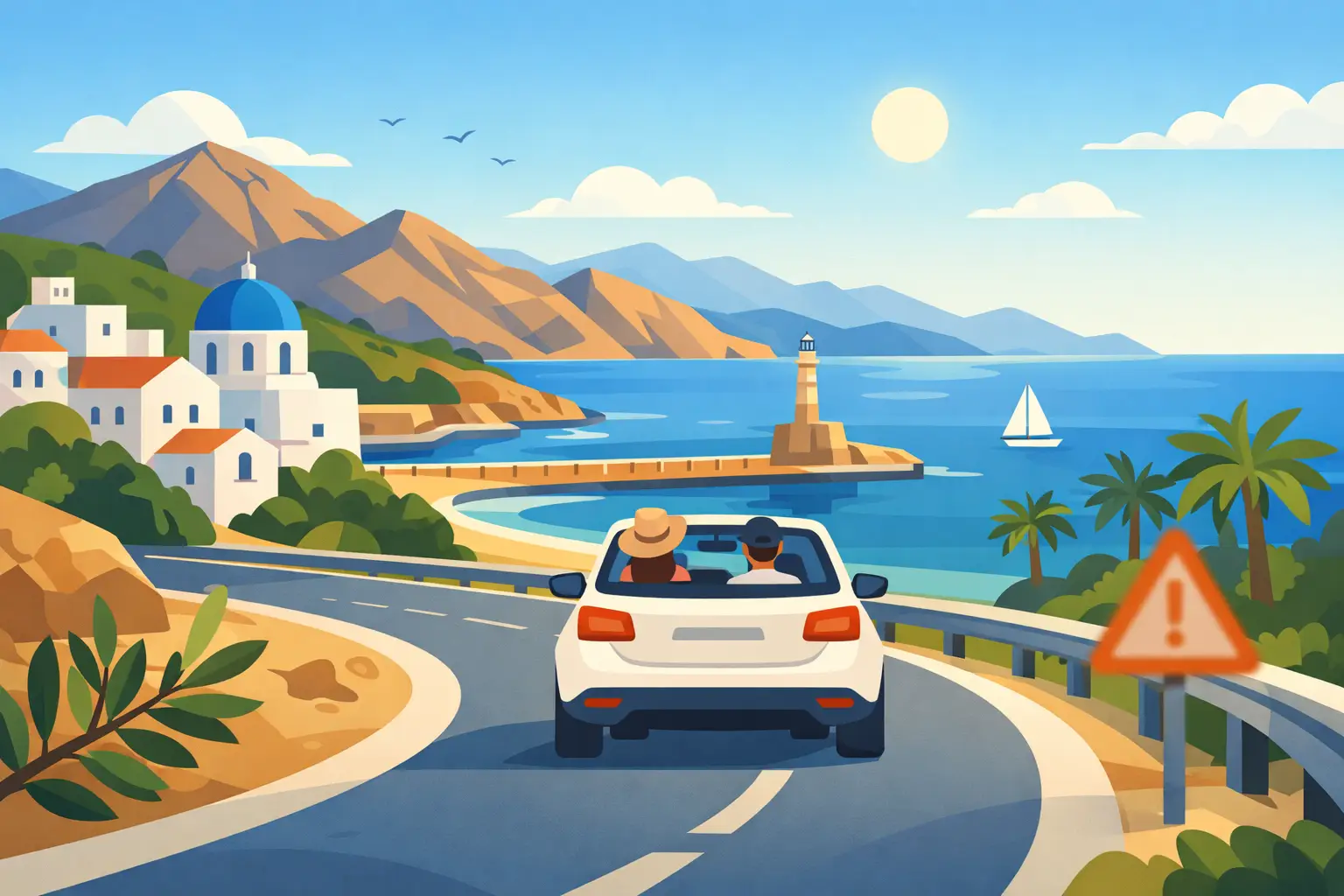
The first surprise for many visitors is not the mountain roads or the sharp bends. It is how quickly driving in Crete starts to feel normal once you know the rhythm of the island.
Crete is not difficult in the way some cities are difficult. You are not dealing with constant gridlock, confusing ring roads or aggressive urban traffic all day. What catches tourists out is the mix – modern main roads, narrow village lanes, steep hills, goats appearing where you do not expect them, and local drivers who know every corner far better than you do. A little preparation makes a big difference.
A guide to driving in Crete for tourists
If you want the short version, it is this: drive calmly, leave more time than the sat nav suggests, and do not treat every road on the map as an easy road. Crete rewards independent travellers because so many of its best beaches, tavernas and mountain villages are easier by car. But the island is better enjoyed when you stop trying to drive fast and start driving sensibly.
For most holidaymakers, a car gives you freedom rather than pressure. You can leave Hersonissos after breakfast, reach a south coast beach without depending on bus times, and return when it suits your family or group. That flexibility is the real value.
What the roads in Crete are actually like
The main north coast route, often called the national road, connects the larger towns and is usually straightforward. Around Heraklion, Rethymno and Chania, traffic can be busier and lane discipline can feel looser than in the UK. Still, on the main stretches the road is generally manageable for visitors who stay alert.
The bigger difference comes once you leave the main road. Village streets can be very narrow, especially in older places built long before modern traffic. On mountain routes, bends can be blind, surfaces may vary, and barriers are not always where a British driver might expect them. None of this means you should avoid these roads. It simply means you should approach them with patience.
Road quality also depends on where you are going. A popular beach road may be perfectly fine, while a shortcut suggested by your phone might turn into a rough, narrow track. If a route looks much smaller than expected, trust your judgement rather than blindly following the device.
The road shoulder matters more than you think
One local habit often confuses tourists at first. On some main roads, slower drivers move slightly onto the hard shoulder to let faster traffic pass. You may see this often. It is normal here, but it does not mean you should feel pushed into driving faster than you are comfortable with.
If someone behind wants to overtake, stay calm, keep predictable road position and allow space when safe. Do not brake suddenly or make hurried decisions. Steady, clear driving is always safer than trying to copy local habits before you are confident.
The rules and practical basics
In Crete, you drive on the right and overtake on the left. Seat belts are compulsory, and children must use the correct restraint. Mobile phone use while driving is not allowed unless you are properly hands-free, and drink-driving limits are stricter than many visitors assume. If you are driving, the simplest rule is not to drink at all.
You should always carry your driving licence, rental paperwork and identification as required by your hire provider. Before leaving the car park, take two minutes to adjust mirrors, check lights, understand the handbrake and make sure you know whether the car uses petrol or diesel. That sounds obvious, but holiday arrivals after a flight are when avoidable mistakes happen.
If you are hiring a car, clarity matters as much as price. Many travellers focus only on the daily rate and realise too late that mileage, excess, glass or tyre cover, or payment requirements are less straightforward than expected. A local company such as ORION Rent A Car appeals to many visitors for exactly this reason – no hidden costs, no excess on key cover areas, free km and no credit card required make holiday driving feel simpler from the start.
Parking in towns, resorts and villages
Parking is usually easier than in major mainland cities, but it depends where and when you travel. In resort areas such as Hersonissos, Malia and Stalis, summer evenings can be busy, especially near the seafront. In older villages, spaces may be limited because streets were never designed for heavy visitor traffic.
If you see locals parking confidently in places that look impossible, do not feel obliged to do the same. It is often better to park a few minutes away and walk. On hot days, look for shade if you can, but not at the expense of blocking access or squeezing into a risky space.
Be especially careful not to leave the car where it obstructs a narrow lane, hotel entrance, gate or turning point. In some villages, one badly parked car can create a full traffic jam.
Fuel, distances and timing
Crete often looks small on a map. In practice, journeys can take longer than visitors expect. A route of 60 or 70 kilometres may involve bends, climbs and slower traffic, so plan by travel time rather than distance.
Fuel stations are easy to find around larger towns and the north coast. In more remote areas, especially if you are heading south or into the mountains, it is sensible not to wait until the tank is nearly empty. Fill up earlier than you think you need to.
Do not build your day around too many stops. One beach, one village and a relaxed lunch is often a better Cretan driving day than trying to cram in six highlights and spending most of your holiday in the car.
Mountain roads and remote beaches
This is where common sense matters most. Some of Crete’s most memorable places require a more careful drive, and that is part of their charm. Roads to mountain villages can be steep and twisting. Roads to remote beaches may be partly unsealed or narrower than expected.
Not every route is suitable for every driver or every car. If you are nervous on exposed roads with tight bends, there is no shame in choosing easier destinations. If you are travelling with children or older relatives, comfort may matter more than ticking off a famous beach.
Set off early for longer drives, especially in peak summer. You avoid the hottest part of the day, traffic is lighter, and you are less likely to feel rushed on the return journey.
Animals, scooters and sudden surprises
Expect the unexpected, particularly outside towns. Goats, sheep and stray cats can appear near the road. Scooters may move quickly through resort areas. On rural roads, a vehicle can emerge from a side turning with little warning.
This is why local driving advice always comes back to the same point: slow down before you need to. If you drive at a pace that allows for surprises, Crete feels much easier.
Is driving in Crete safe for tourists?
Yes, for most visitors it is perfectly safe, provided you drive with care and respect the road conditions. The biggest risk is usually overconfidence – taking a mountain bend too quickly, trusting a sat nav too much, or assuming a familiar-looking road behaves like one back home.
Crete is an island where defensive driving pays off. Keep your speed modest, leave space, avoid night driving on unfamiliar rural roads if you are tired, and do not let impatient drivers behind you dictate your pace.
If you are collecting a hire car at the airport or your accommodation, a straightforward handover helps. You want clear explanations, proper maintenance, and 24 hour assistance if anything goes wrong. That peace of mind is worth more than a headline rate that later grows with extra charges.
A guide to driving in Crete for tourists who want less stress
The easiest way to enjoy driving here is to treat it as part of the holiday, not a test. Leave earlier. Stop for the view. Pull over safely if you need a moment to reset. And choose a car that suits your real plans, not your most ambitious ones. A compact car is often ideal for village streets and everyday trips, while a larger vehicle may suit families with luggage and child seats.
It also helps to be honest about your own driving style. Some visitors are happy with mountain routes and long days out. Others want easy coastal runs, beach parking and simple transfers from Heraklion or Chania. Neither approach is better. The right one is the one that lets you enjoy Crete without worrying about every corner.
Once you settle into the pace, driving here becomes one of the best parts of the trip. You notice more, you reach places buses do not, and the island opens up in a way package excursions rarely can. Give yourself time, keep things simple, and Crete tends to return the favour.
 Complete Insurance
 Free km (mileage)
 VAT – Inclusive price
Leave a Reply