
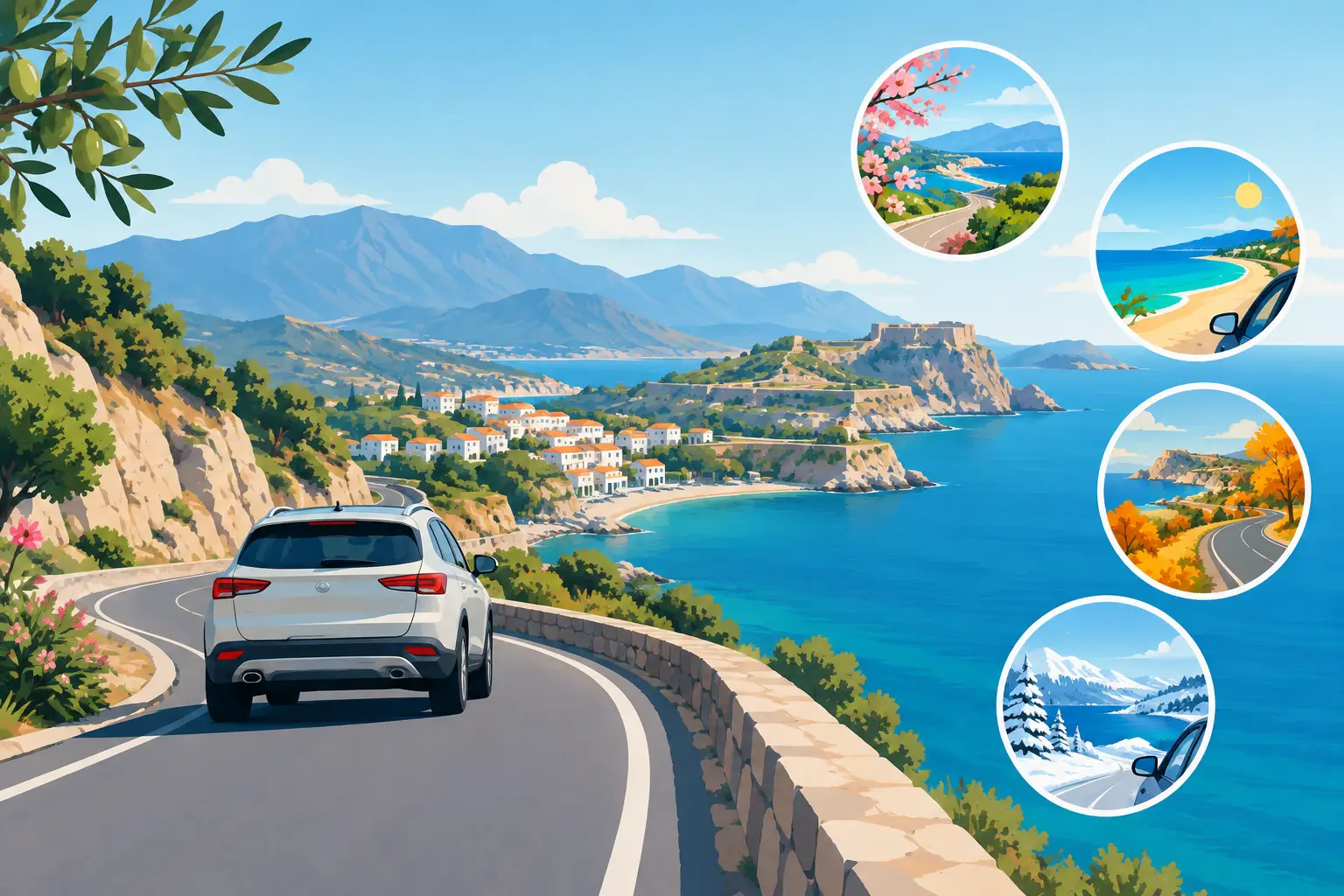
A drive from Hersonissos to a quiet south-coast beach can feel wonderfully simple in June, then require a very different approach in January. This Crete seasonal driving guide is designed to help you plan around the island’s real conditions: heat, rain, wind, traffic, daylight and the type of roads you may meet beyond the resorts.
Crete rewards independent travellers. A car gives you the freedom to stop in a mountain village, change plans when a beach is windy, or reach places where bus timetables are limited. The key is not to treat every month the same. Choose a suitable vehicle, allow more time than the map suggests, and adjust your route to the weather.
Driving in Crete through spring
Spring, from March to May, is one of the most comfortable times to explore by car. The landscape is green, wildflowers line many rural roads, and daytime temperatures are usually pleasant for sightseeing. It is also quieter than high summer, particularly on the roads leading to popular beaches and archaeological sites.
The trade-off is changeable weather. A bright morning can become wet or misty in the hills, especially in March and April. Mountain roads may have loose stones after winter rainfall, and some smaller routes can be affected by local repairs or runoff. Keep your speed sensible, leave a larger gap from the vehicle ahead, and do not assume a road that was dry at sea level will be dry higher up.
Spring is an excellent season for routes through Lassithi Plateau, the villages around Archanes, or inland drives from the north coast towards the south. If your plans include higher ground, bring a light waterproof layer and check conditions on the day. Snow can remain on the highest peaks well into spring, even while the coast feels warm.
Spring driving tip: plan for Easter movement
Greek Orthodox Easter is an important family celebration. Roads can be busier around towns and villages, and restaurants may operate different hours. It is a lovely time to experience Crete, but allow extra time for collection days, local events and journeys around the holiday weekend.
Summer roads: heat, traffic and beach access
From June to September, Crete is at its busiest and sunniest. The main roads between Heraklion, Hersonissos, Malia, Agios Nikolaos and the larger resorts carry more traffic, particularly in late morning and early evening. Allowing time is more useful than rushing. A relaxed start often makes a far better day than trying to fit three distant destinations into one route.
Heat is the main consideration. Park in shade when possible, use a windscreen sunshade, and avoid leaving passports, medicines, electronics or children’s items in a hot car. Carry water for everyone in the vehicle, particularly when travelling to remote beaches or gorges where facilities can be limited.
Popular destinations such as Balos, Elafonissi, Vai and Matala can become busy well before midday. Leaving early gives you cooler driving conditions, easier parking and more time to enjoy the destination. For families, it also avoids the least comfortable part of the day for walking around a hot car park.
Summer is not only about sunshine. Strong northerly winds, known locally as meltemi, can affect exposed roads and beaches. They are usually more noticeable on the north coast and in open mountain sections. Keep both hands on the wheel, expect gusts when passing gaps in the landscape, and take care when opening doors. If you are travelling with roof-mounted equipment or a full boot, give yourself a little more braking distance.
Choosing the right car for summer
A compact car works well for couples staying in or near resorts, with easier parking in busy villages and town centres. For a family, luggage and beach equipment can quickly change the calculation. A larger hatchback, estate or SUV may offer the space and comfort that makes longer days easier.
The best choice depends on where you intend to go. Crete’s main roads are suitable for standard cars, but some beach approaches and remote routes are narrow, uneven or unpaved. Never take a rental car onto a road that is unsuitable for the vehicle or prohibited by the rental terms. If a route looks questionable, park where it is safe and continue on foot, or choose an alternative destination.
Autumn: the most flexible season for a road trip
September and October often provide the best balance for visitors who want warm sea temperatures with less pressure on the roads. The high-summer crowds begin to ease, but many tavernas, attractions and boat trips are still operating. It is a particularly good period for couples and repeat visitors who want to explore beyond their usual resort.
By late October, the first proper rains may arrive. After a long dry summer, roads can become slippery when rain mixes with dust and oil on the surface. This is a time to drive smoothly: brake earlier, avoid sudden steering movements and reduce speed on bends. Be especially careful on polished town streets, painted road markings and shaded sections of mountain road.
Autumn is also harvest season in many areas. You may meet agricultural vehicles, workers near olive groves or temporary activity on rural roads. Slow down, be patient and expect the unexpected around blind bends. These small delays are part of driving on a working island, not a reason to take risks.
Winter driving in Crete: quieter, but not effortless
Winter, roughly November to February, shows a different Crete. The coast can still offer mild, bright days, while rain, fog and occasional snow affect inland and mountain routes. The roads are quieter, which can make travelling feel easy, but reduced daylight and rapidly changing weather deserve more attention.
Avoid treating a sunny forecast at your hotel as a forecast for the whole island. A journey from the north coast to a south-coast village may cross several weather systems. Before setting off, look at the full route, tell someone where you are going if you are heading into remote areas, and keep your mobile phone charged.
In heavy rain, surface water can gather quickly on roads and minor crossings. Do not drive through flowing water simply because another vehicle has done so. Conditions can change in minutes, and depth is difficult to judge from the driver’s seat. Turn around and use a recognised route if there is any doubt.
Winter is not the season for ambitious mountain shortcuts. Main roads are normally the wiser choice, even if they take longer. If you want to visit snowier areas, ask locally about conditions and use a vehicle appropriate to the route. In poor visibility, slow down and use dipped headlights as needed. Fog can be particularly deceptive on winding roads, where bends and animals may appear with little warning.
Crete seasonal driving guide: rules that matter all year
Whatever month you visit, drive on the right and make room for local traffic when it is safe to do so. On narrow roads, do not stop on a bend or reverse without checking carefully. Many village streets are tighter than they appear on a map, with parked cars, scooters, pedestrians and deliveries sharing the space.
Crete’s scenery invites spontaneous stops, but only pull over where you can do so safely and legally. A quick photograph is never worth obstructing a road or stepping into traffic. At beaches and viewpoints, check the ground before parking. Dry-looking verges can be soft, uneven or difficult to leave once the car is loaded.
Fuel stations are straightforward to find around towns and main routes, but less frequent in remote areas. Do not wait until the warning light appears before heading into the mountains or towards a secluded south-coast stay. Filling up when you have around half a tank removes an unnecessary worry.
For every season, a well-maintained vehicle and clear rental cover make a practical difference. With ORION Rent A Car, comprehensive cover includes CDW with no excess, theft and fire cover with no excess, plus tyres, glass and mirrors. There are no hidden costs, free kilometres and no credit card required, so you can focus on the route rather than worrying about a surprise at the counter.
Give the island the time it deserves
The most enjoyable Crete driving days usually have room for a change of plan. If rain settles over the mountains, visit a museum, winery or coastal town instead. If the north coast is windy, consider a sheltered bay elsewhere. If a mountain road feels too narrow for your confidence, turn back without hesitation.
Crete is large, varied and more mountainous than many visitors expect. Drive with patience, choose your route for the season rather than just the shortest distance, and let the best moments happen between the places you meant to see.
 Complete Insurance
 Free km (mileage)
 VAT – Inclusive price

Leave a Reply