
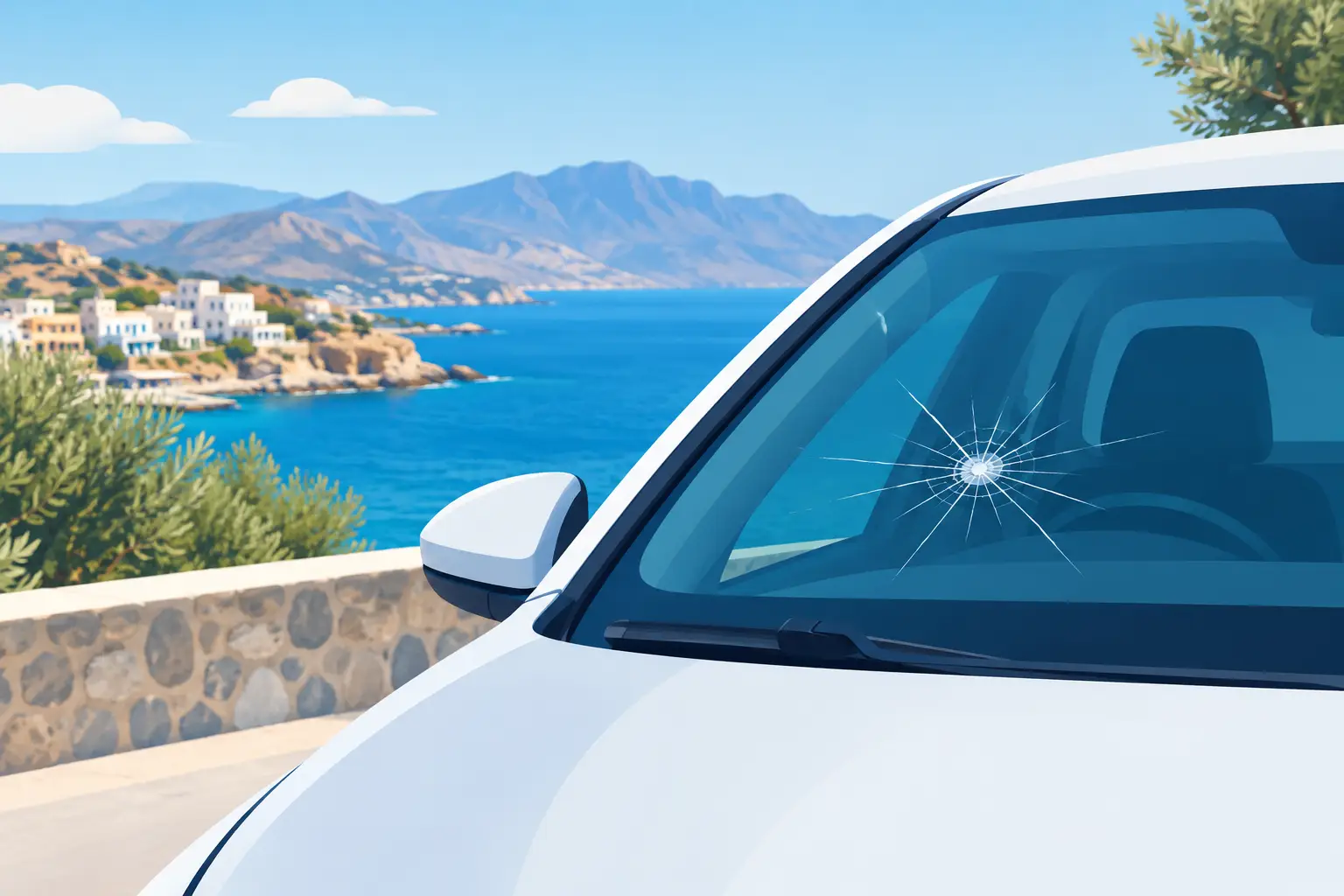
A stone flicks up on the road to Spinalonga, there is a sharp crack, and suddenly your relaxed drive has a windscreen chip to worry about. So, does rental cover windscreen damage? Sometimes, but never assume it does. Glass cover varies widely between rental companies, and the small print can make a real difference to what you pay after an incident.
For a straightforward holiday in Crete, look for a rental agreement that clearly states whether windscreens, windows, mirrors and tyres are covered – and whether there is an excess to pay. The answer should be clear before you collect the keys, not something you need to chase while standing at the roadside.
Does rental cover windscreen damage as standard?
Standard car hire insurance often includes Collision Damage Waiver, usually called CDW. This reduces your financial responsibility if the rental car is damaged, but it does not automatically mean every part of the vehicle is protected in the same way.
Windscreens, side windows, rear glass, mirrors, wheels and tyres are frequently treated as separate items. Some companies include them in their comprehensive cover. Others exclude them altogether, offer them only as a paid extra, or apply a high excess. A seemingly low daily rental price can therefore leave a costly gap.
The practical answer is: it depends on the rental company and the cover you have selected. Check the policy wording for terms such as “glass”, “windscreen”, “windows”, “mirrors”, “tyres”, “excess” and “excluded damage”. If the wording is vague, ask for a clear written answer before booking.
At ORION Rent A Car, cover for tyres, glass and mirrors is included, alongside comprehensive insurance with no excess. That means the quoted rental price is designed to give you clarity rather than an insurance decision at the collection desk.
Why windscreen cover matters on a Crete holiday
Crete is a wonderful island to explore by car, but holiday driving is not always limited to smooth dual carriageways. You may travel on rural lanes, mountain roads, unmade access roads near beaches or busier stretches around resorts and airports. Loose grit and stones can be thrown up by another vehicle without warning.
A chip does not have to be dramatic to need attention. Heat, road vibration and air-conditioning can turn a small mark into a spreading crack. If the glass is damaged badly enough to affect visibility, the vehicle may not be safe to drive and will need to be assessed promptly.
This is why glass cover is about more than avoiding an unexpected bill. It also gives you a clear plan when something inconvenient happens. You can contact the rental company, explain the issue and receive practical guidance instead of trying to arrange repairs yourself in an unfamiliar place.
Glass cover and CDW are not always the same thing
It is easy to see “full insurance” or “CDW included” during an online search and assume you are fully protected. Those descriptions can mean different things, so it pays to separate the terms.
CDW generally relates to damage to the vehicle body and may still carry an excess. An excess is the amount you could remain responsible for, even where insurance applies. For example, a rental agreement may say that windscreen damage is covered, but only after you pay the first several hundred euros.
Glass cover may be included within a wider no-excess policy, or it may be a separate waiver. It can cover a chipped or cracked windscreen, broken side or rear window, and sometimes the external mirrors. Yet conditions still matter. Cover may not apply if the damage results from prohibited use, careless driving, an undeclared driver or a failure to follow the company’s reporting procedure.
The fairest approach is simple: find out both whether glass is included and whether there is any excess. One answer without the other is not enough.
What to check before you book
Before confirming your car hire, read the inclusions as carefully as you would check the luggage allowance for your flight. You do not need to be an insurance expert, but you should be able to answer a few basic questions.
Is windscreen and window damage included? Are mirrors and tyres included too? Is there a zero excess, or will you be charged up to a stated amount? Does the company require a credit-card deposit or block a large amount as security? And what should you do if the damage occurs?
Also check whether the rental price includes VAT, unlimited or free kilometres, roadside assistance and any airport delivery charge. These points are separate from windscreen cover, but together they show whether a quote is genuinely all-inclusive or likely to grow later.
Be cautious with third-party excess reimbursement policies sold by comparison websites. They can be useful for some travellers, but they often work on a pay-first-and-claim-later basis. The rental company may still charge your card or retain a deposit, and you would need to submit documents after your holiday. Direct no-excess cover can be simpler when you want certainty.
What to do if the windscreen is chipped or cracked
Do not ignore the problem, even if the chip appears small. Pull over somewhere safe when possible and take clear photographs of the damage, including a wider picture showing the vehicle registration if practical. Note where and when it happened, particularly if you saw a stone strike the glass.
Then contact your rental provider using the assistance number supplied with your booking. Tell them whether the damage is a small chip, a crack, or shattered glass, and whether it affects your view of the road. They can advise whether you can continue driving, need a replacement vehicle, or should wait for assistance.
Avoid arranging a repair independently unless the company specifically instructs you to do so. A rental vehicle may need an approved repairer, and unauthorised work can create confusion over costs and liability. Equally, do not attempt a DIY resin repair bought from a petrol station unless you have been told it is acceptable.
If the incident involves another vehicle, a break-in or deliberate damage, contact the police as well and follow the rental company’s instructions. Keep any report number, photographs and messages. These details help establish what happened and allow the rental team to respond quickly.
Situations where cover may not apply
Even generous insurance is not a licence to take unnecessary risks. Rental terms normally require the car to be driven legally, carefully and only by authorised drivers. Damage may be excluded where a driver is under the influence of alcohol or drugs, uses restricted roads, drives off-road, ignores a warning light, or leaves the car unsecured.
There can also be a distinction between accidental road damage and neglect. A stone chip picked up during normal driving is very different from continuing to drive with a badly cracked windscreen after being told to stop. If visibility is compromised, treat the matter as a safety issue first.
For families, it is worth remembering that windscreen damage can happen on any journey, including a short run to the supermarket or a day trip from Hersonissos to the Lassithi Plateau. Comprehensive cover is there to remove the financial uncertainty, but prompt communication remains part of hiring responsibly.
A clearer way to choose your Crete rental car
The best rental agreement should not make you decode exclusions while you are trying to start your holiday. Look for direct wording that confirms glass cover, tyres and mirrors, states the excess plainly, and explains how to get help 24 hours a day.
A low headline price can look attractive until a windscreen, deposit, insurance excess or airport charge is added. Choosing transparent cover may cost slightly more upfront with some providers, but it can be better value than taking on a large risk for the sake of a small saving.
Before setting off, save the assistance number in your phone, inspect the car with the handover representative and make sure any existing marks are recorded. Then you can take the coast road, stop where the view calls for it, and enjoy Crete knowing that if a stone meets your windscreen, you already know what happens next.
 Complete Insurance
 Free km (mileage)
 VAT – Inclusive price

Leave a Reply