
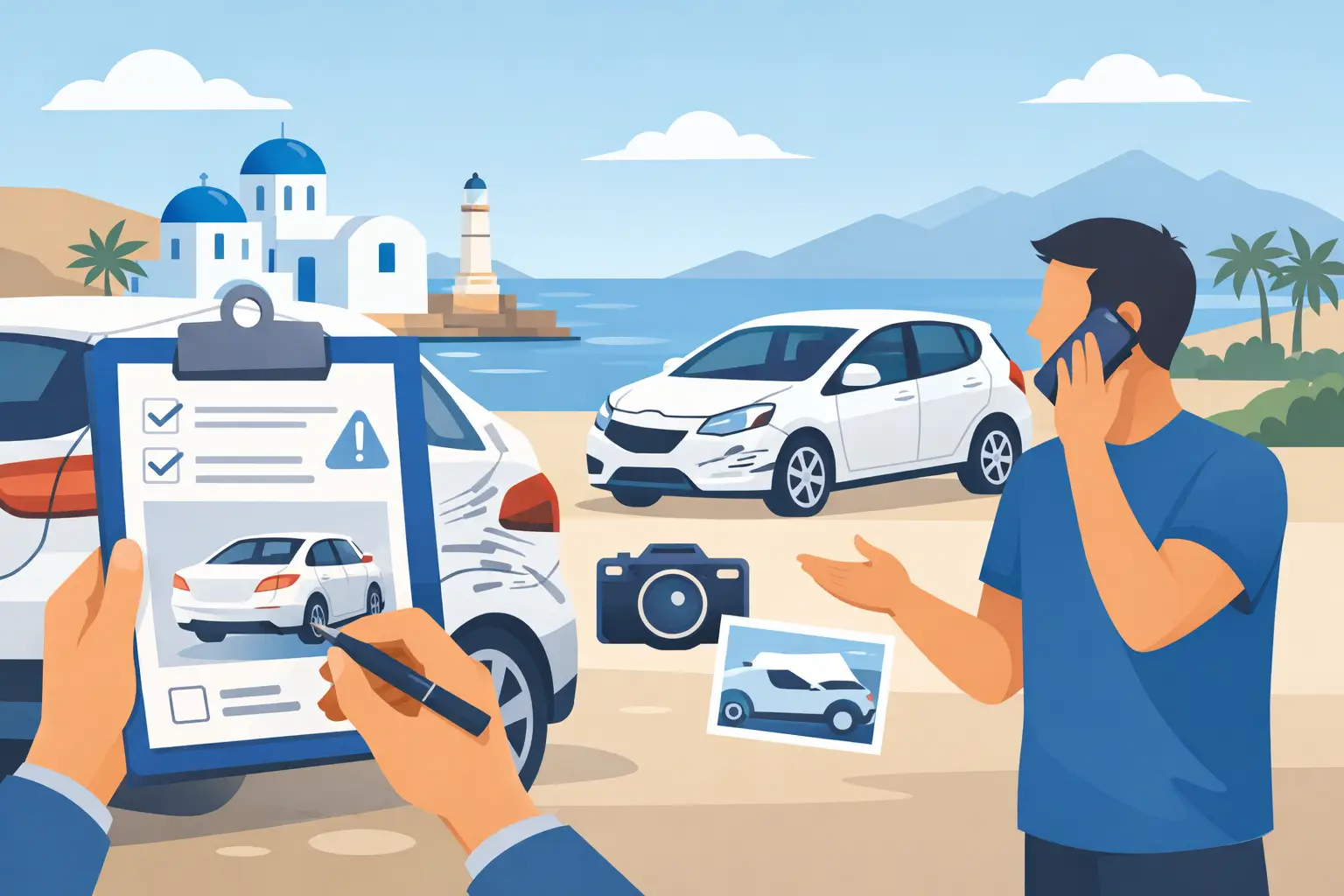
A scratched bumper in a tight taverna car park, a chipped windscreen on a mountain road, or a tyre warning light can quickly put a cloud over a good holiday. The right way to report rental vehicle damage is simple: make the situation safe, tell your rental company straight away, and keep a clear record of what happened. Early reporting protects you, helps the rental team arrange practical support, and prevents small issues from becoming bigger ones.
For drivers exploring Crete, this matters especially on narrow village streets, uneven rural roads and busy summer car parks. Damage can happen even when you are careful. What matters most is how you respond.
First, make the vehicle and everyone safe
If there has been a collision, stop as soon as it is safe to do so. Switch on the hazard lights, check whether anybody is injured and move away from traffic where possible. Do not continue driving if the vehicle feels unsafe, a tyre is damaged, a warning light suggests a serious fault, or there is damage that could affect steering, lights, brakes or visibility.
Call 112 if anyone needs medical help or if there is an immediate danger. In Greece, you may also need police attendance after a road traffic accident, particularly where another vehicle, person or property is involved. Your rental company can advise you on the next practical step, but emergency services should always come first.
For minor damage in a safe location, such as a scrape found while parked, take a breath before doing anything else. There is no benefit in guessing, arguing with another driver or trying to polish away the evidence. A calm, factual report is the best starting point.
Report rental vehicle damage without delay
Contact the rental company as soon as you can, ideally while you are still at the vehicle. Use the emergency or assistance number supplied at handover or in your booking documents. A good local provider should be able to tell you whether the car is safe to drive, what information is needed and whether a replacement or repair support is required.
When you report rental vehicle damage, provide the vehicle registration or booking reference, your name, your location and a brief description of the problem. A location pin from your mobile phone can be very useful if you are on an unfamiliar road. Explain whether another vehicle was involved, whether anyone is hurt, and whether the car can still be driven safely.
Be accurate, not dramatic. “Small dent on the rear passenger door, car drives normally” is more useful than “the car is badly damaged” if you are unsure. Equally, do not minimise a problem with a tyre, windscreen, mirror or underbody. These components can affect safe driving even where the damage looks minor.
If another driver is involved
Exchange the essential details: name, telephone number, vehicle registration, insurer details if available, and photographs of the other vehicle and the scene. Avoid admitting liability at the roadside. You do not need to decide who was at fault before speaking to the rental company or, where needed, the police.
If the other driver leaves, refuses to share details, or you believe the incident may involve deliberate damage, call the police and notify the rental company immediately. The same applies if the rental car is stolen or vandalised.
Take photographs that tell the full story
Photos are not about building a case against someone. They give the rental team a reliable picture of the situation and can speed up a solution. Take wide shots showing the vehicle in its surroundings, then closer images of each affected area. Photograph number plates where another vehicle is involved, any relevant road signs, and the road surface if a pothole or loose stone may have contributed.
Make sure your pictures are clear and taken in daylight where possible. If it is dark, use your mobile phone’s flash carefully and take additional images when there is better light, provided the vehicle is secure and it is safe to do so. Keep the original files on your mobile phone until the rental is fully closed.
A short note is helpful too. Record the time, place, weather, direction of travel and a plain account of what happened. For example: “17:40, near Koutouloufari, reversing slowly into a marked space, contact with low stone edge.” These details are easier to remember immediately than after a busy day of travelling.
Do not repair or arrange recovery yourself
It can be tempting to visit the nearest garage for a quick fix, especially if you are trying to keep a day trip on track. Please contact the rental company first. Unauthorised repairs may create safety concerns, complicate insurance handling and make it harder to confirm what work was done.
The right response depends on the damage. A light cosmetic mark may simply be recorded for inspection when you return the vehicle. A puncture, broken mirror or cracked windscreen may need prompt assistance. A collision that leaves the car undriveable requires recovery and, where available, a replacement vehicle. Let the company coordinate this rather than accepting help from an unknown third party.
At ORION Rent A Car, customers can contact the team for 24-hour assistance across Crete. Clear communication allows the team to focus on getting you safe and mobile again, rather than leaving you to work out local arrangements alone.
Check what your cover includes, but do not assume
Insurance wording can be confusing, particularly when you are comparing rental prices before a holiday. The key question is not simply whether the vehicle is insured. It is what is covered, whether an excess applies, and what responsibilities remain with the driver after an incident.
Some rental agreements exclude certain situations, such as driving under the influence, using an unauthorised driver, driving on unsuitable roads, or failing to report an accident properly. Cover may also treat tyres, glass, mirrors and the vehicle underbody differently. This is why it is worth reading the terms before you collect the keys, not only after something has happened.
With transparent all-inclusive cover, including CDW with no excess and cover for tyres, glass and mirrors, the financial worry can be greatly reduced. However, no excess does not mean no need to report damage. Prompt reporting is still essential for safety, recovery and proper handling of the incident.
Damage you notice at collection or later
Before setting off, walk around the vehicle and compare its condition with the handover record. Take a few time-stamped photographs, including the wheels, windscreen and mirrors. This takes less than two minutes and gives everyone the same reference point.
If you notice a mark that was not recorded, tell the rental team straight away. Do not wait until the end of the hire because you are unsure whether it was already there. The same rule applies if you discover damage later and do not know how it occurred. Honesty and speed are far more useful than trying to solve the mystery yourself.
What to do after a minor parking scrape
A minor scrape is one of the most common holiday rental incidents. If no other vehicle or person is involved, park safely, take photos and call or message the rental company using the contact method provided. Explain whether paint has transferred, a panel is dented, or a light, mirror or sensor is affected.
If you touched a parked car or property, do not leave without taking reasonable steps to identify the owner. Photograph the situation, leave your contact details if appropriate, and seek advice from the rental company and police if you cannot locate the owner. Leaving the scene can turn a manageable issue into a far more serious one.
Keep your return straightforward
When returning the car, mention the incident again even if you have already reported it. Share any police report number, photographs and information received from another driver. The rental team can inspect the vehicle with the full context rather than relying on assumptions.
This is also why choosing a company with clear inclusions matters. A low headline rate can look attractive until excess charges, restricted cover or unexpected administration fees appear after an incident. Transparent pricing, VAT-inclusive quotes, free kilometres and stated insurance terms make it easier to understand the arrangement before you travel.
Damage is never part of the holiday plan, but it does not have to ruin the day. Make safety your first priority, report the issue promptly, and let the people responsible for the vehicle help you decide what happens next. Then, once it is safe to do so, you can get back to enjoying Crete with a little more confidence.
 Complete Insurance
 Free km (mileage)
 VAT – Inclusive price
Leave a Reply